Living Through a Kitchen Remodel: Power, Gas and Temporary Setups
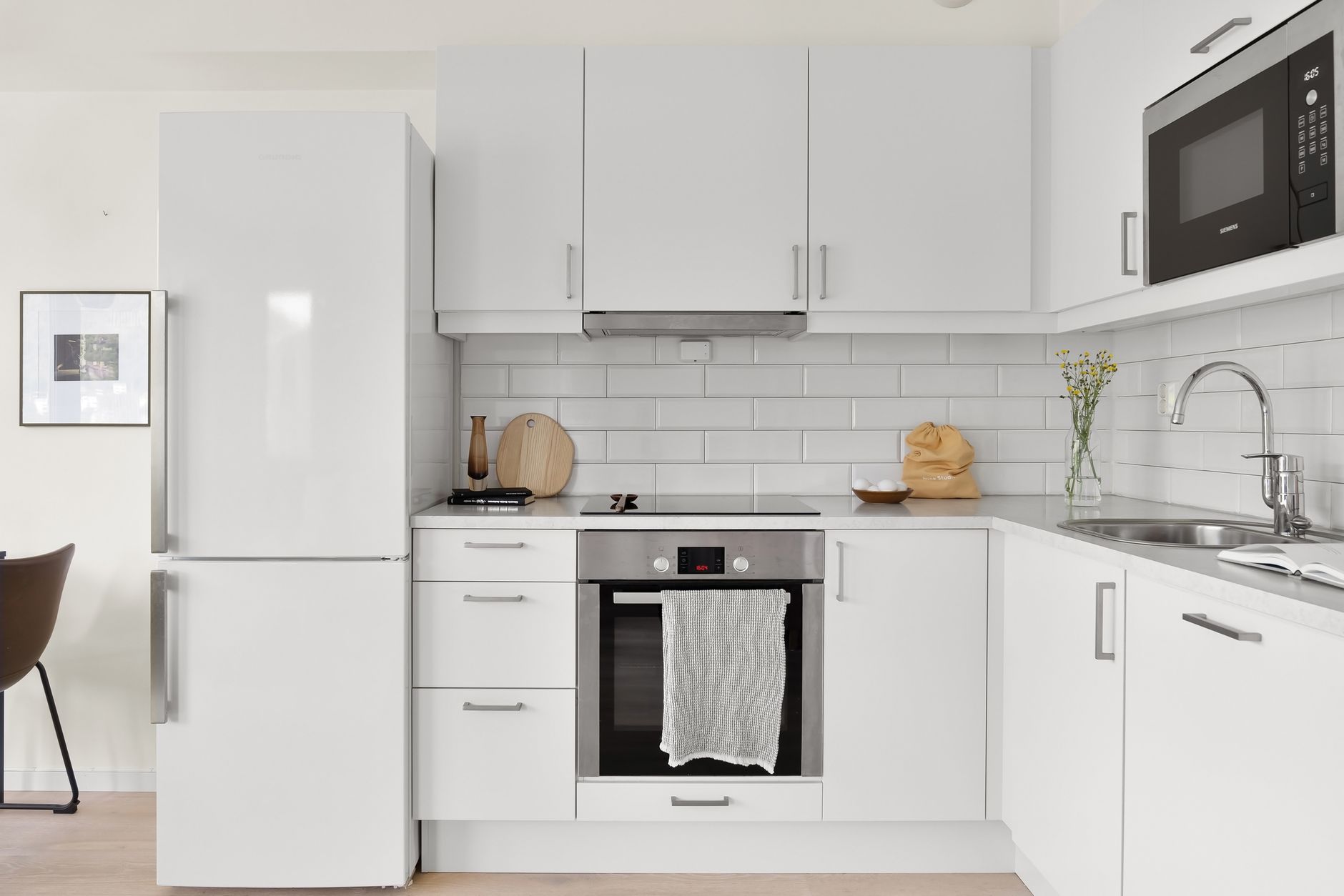
A kitchen remodel means days without a stove, hours without power to half the house, and a stretch where the sink does not work. People in Carlsbad often plan the finished kitchen in detail and the interruption barely at all. These are the questions that come up most often during the electrical and appliance stage of the work, answered from the trade side.
How long is the power off during a kitchen remodel?
Power is not off for the whole job. Demolition and framing run with temporary power on a few circuits, and the electrician shuts breakers off only when tying new wiring into the panel or moving existing circuits. Those shutdowns are measured in hours and are scheduled around the household, not in days.
The longer interruption comes if the panel is being replaced. A panel change needs the utility to disconnect service at the meter, the electrician swaps the panel, and the inspector or utility reconnects it. That day runs long, and refrigerators and freezers need somewhere to go. A cooler with ice or a neighbor's garage freezer covers it.
Where does the refrigerator go?
Most households move it to the garage or a dining room and plug it into a circuit that stays live. That outlet should not share a breaker with a power tool, because a crew running a saw can trip it and nobody notices the food warming. A plug-in outlet tester and a thermometer in the fridge are cheap ways to catch a problem. The crew can label that circuit at the panel so nobody turns it off by mistake.
What does a temporary kitchen need?
A temporary setup works with four items: a table or folding counter, a microwave, a hot plate or an electric kettle, and a bin for dishes. The sink is the hard part. A utility sink in the garage or a bathroom vanity handles most washing. Washing dishes in a bathtub is a bad idea because the drain gets clogged with food waste.
Plug these items into more than one circuit. A microwave and a hot plate on the same twenty-amp circuit trip the breaker the minute both run. In a house near Buena Vista Lagoon with older wiring, an extension cord running from another room is a common source of overheated cords, so heavy-gauge cords rated for the load are the only safe choice.
When does the gas get shut off and turned back on?
The gas company or a licensed plumber closes the line at the appliance valve when the old range comes out. The line stays closed until the new range is connected and the pipe has passed a leak test. Turning gas back on is done by a licensed person, and the pilot lights on any other gas appliances, such as a water heater, get checked once service is restored. Leaving the shutoff valve open and the range disconnected is a hazard, and a capped valve is the correct state.
What does the inspector look at, and when?
There are two main visits for electrical and appliance work. The first is the rough inspection, after wires are run but before insulation and drywall. The inspector checks cable size, box fill, support, protection devices and the routing of any new circuits. The second is the final, after fixtures and appliances are in. That visit checks that receptacles work, protection devices trip on their test buttons, the range hood moves air, and the anti-tip bracket is installed.
A remodel without a rough inspection can mean opening finished walls later. Scheduling the rough inspection is the crew's job, and the homeowner usually only needs to make sure someone is home for the visit.
How much dust gets into the rest of the house?
Demolition makes dust, and drywall sanding makes the worst of it. Plastic sheeting taped at the doorways, a zipper door at the main opening and a fan in a window pushing air out reduce what travels. The heating and cooling return vents near the kitchen should be covered during the dusty days, or dust rides the system into every room. Homes close to Batiquitos Lagoon and the coast also get a damp film in winter, so sheeting that holds adhesive in humid weather is worth buying.
Can the dishwasher and range be installed before the countertops?
The dishwasher and range go in after the countertops. The countertop fabricator takes measurements once the base cabinets are set, and the stone or laminate arrives days later. Installing a dishwasher first and then cutting stone around it risks damage and a poor fit, because the dishwasher mounts to the underside of the counter. The range sits in an opening that is finalized by the counter and the backsplash.
The refrigerator can go in at any point once there is floor and power, but a counter-depth model lined up with the cabinet faces often waits until the end so it does not get scratched.
What if the old wiring turns out to be bad?
It happens. When a wall is opened, the crew can find cloth-covered wiring, aluminum branch wiring, a spliced junction hidden inside a wall, or a circuit that feeds the kitchen from three other rooms. The fix is to replace the bad run, document it, and add it to the scope through a written change order. Skipping it and closing the wall leaves a hidden problem behind a new backsplash. Homes from the 1970s around La Costa are more likely to have aluminum branch circuits than houses built decades later, and those need a specific connector type at every device.
Does the order of work matter for appliances?
It does. A rough order that holds up on most jobs is demolition, framing changes, electrical and plumbing rough, mechanical and venting, rough inspection, insulation, drywall, flooring and cabinets, counters, backsplash, appliance set, final hookups, and final inspection. Appliances arrive late in that sequence, but their specification sheets are needed at the start, because cutouts, circuits and venting depend on them.
Ordering appliances early and storing them in the garage protects the schedule from delivery delays, as long as the boxes are kept dry and upright.
What should be written down before work starts?
A one-page list of decisions prevents arguments. It names the cooktop fuel, the circuits, the hood model and duct exit, the lighting switch layout, the refrigerator model and the dishwasher model. It also records where the shutoff valves and the panel are, and who has permission to turn power off. A photo of the open wall before closing records where every pipe and wire runs, which is useful years later when a nail or a hole saw needs to avoid them.
How are pets, kids and noise handled?
Open walls, exposed wires and loose appliance boxes are not a place for children or animals. A closed door with a latch above reach, a baby gate at the hallway and a clear rule about the work zone cover most of it. Saw cutting, nail guns and demolition are loud, and crews generally start mid-morning and finish by late afternoon. Anyone working from home in a house near Carlsbad State Beach or Legoland California traffic already knows how to move a desk to the far bedroom for the loudest days, which are demolition and the day the countertop is set.
Tell the crew about any pet that slips out of an open door. A propped front door is the usual way a cat or a dog ends up in the street.
Closing note
A kitchen remodel disrupts a household for a limited time, and a plan for power, gas and water makes that time shorter. Settle the temporary arrangements the same week the permit is pulled.